African states agree to ‘de-escalate tensions’ after Washington talks
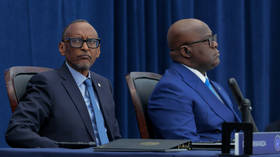
Rwanda and the Democratic Republic of the Congo (DR Congo) have agreed on measures aimed at ending decades of conflict in eastern Congo following talks in Washington, officials have said.
The two-day meeting, part of a renewed diplomatic push, comes as fighting intensifies in the mineral-rich eastern DR Congo, where government forces are battling the M23 rebel group, widely accused by Kinshasa of being backed by Rwanda – an allegation Kigali denies.
According to a joint statement released by the US State Department on Wednesday, the parties committed to respect each other’s sovereignty and take measures including disengaging forces and addressing cross-border security concerns.
“The DRC and Rwanda agreed to a series of coordinated steps to de-escalate tensions and advance progress on the ground… [and] reaffirmed their commitments under the Washington Accords to achieve lasting peace and prosperity in the region,” it said.
Previous agreements have collapsed, with all parties blaming each other for violations.
The DR Congo’s mineral-rich east has been plagued by decades of violence, with dozens of armed groups, including M23, fighting Congolese forces for power and control of resources such as gold and coltan. Clashes escalated in early 2025, killing thousands and forcing large-scale displacement, according to UN agencies. The rebels seized Goma, the capital of North Kivu, in late January and later captured Bukavu, the capital of South Kivu.
Ceasefire efforts have repeatedly faltered, including Qatar-facilitated talks in Doha. Congolese authorities have long accused Rwanda of supporting the militants, allegations backed by a UN panel of experts. Kigali has denied the claims. The accusations have strained Rwanda’s relations with Western partners, including Belgium. In March, Kigali severed diplomatic ties with Brussels, accusing it of harboring “neo-colonial delusions” and interfering in the conflict.
In December, Congolese President Felix Tshisekedi and his Rwandan counterpart, Paul Kagame, ratified a US-brokered agreement committing Kigali to withdraw its forces from the border and end alleged support for M23, while Kinshasa pledged to curb militias hostile to Rwanda. US President Donald Trump has said the pact, which includes calls for a joint security mechanism, gives Washington rights to local mineral wealth. The fighting has continued despite Trump’s claims that he ended the decades-long conflict.
The conflict has created one of the world’s largest humanitarian crises, with 6.9 million people internally displaced – over 5 million of them in the eastern provinces of North Kivu, South Kivu, and Ituri, UN Refugee Agency estimates show.
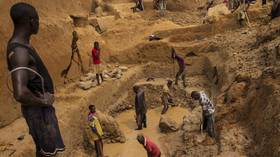
Earlier this month, the US imposed sanctions on the Rwanda Defense Force and four of its senior officials, accusing them of backing the M23 during its seizure of territory in eastern DR Congo, including the key cities of Goma and Bukavu, as well as strategic mining areas.
Kigali says its forces are deployed along the border with DR Congo to defend against the Congolese Army and ethnic Hutu militias linked to the 1994 genocide, including elements of the Democratic Forces for the Liberation of Rwanda (FDLR). The M23 has also said it is fighting to protect ethnic Tutsi communities in eastern Congo.
Kinshasa pledged to intensify efforts to “neutralize” the FDLR following the latest negotiations, according to the joint statement.