Trump demands China, other nations deploy warships to Strait of Hormuz (PHOTOS, VIDEOS)
RT’S LIVE COVERAGE OF THE US-ISRAELI WAR WITH IRAN HAS MOVED HERE
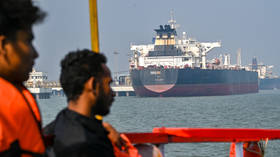
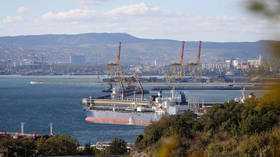
US President Donald Trump has demanded China, Japan and other nations deploy their naval units to the Strait of Hormuz to protect maritime traffic from Iranian strikes. Trump simultaneously reiterated his claims that Iran had been “totally decapitated” and its military capability had been “destroyed 100%.” At the same time, the US leader said it was still “easy” for Tehran to send a “drone or two, drop a mine, or deliver a close-range missile” against shipping.
Earlier in the day, Trump threatened to order strikes on Iran’s main oil export hub on Kharg Island unless Tehran halts attacks on shipping in the Strait of Hormuz, raising fears of a deeper shock to global energy supplies. The US Central Command (CENTCOM) said it has “executed a large-scale precision strike” on the island, targeting military facilities “while preserving the oil infrastructure.”
Iran has insisted the installations on the island had not sustained heavy damage, while the country’s elite Islamic Revolutionary Guard Corps (IRGC) said it maintains “full and precise control” over the Strait of Hormuz. The IRGC also threatened retaliation against American “hideouts” in the Gulf states.
The escalation follows new reports by Iranian media claiming that a US oil tanker was attacked and set on fire near Sharjah in the United Arab Emirates.
Here are the latest developments as RT continues to bring you up to date:

- Tehran’s Islamic Revolutionary Guard Corps said it has carried out additional strikes on Israel in coordination with Lebanon’s Hezbollah movement, according to Iranian media. A number of countries across the Gulf reported intercepting aerial strikes from Iran overnight, including Qatar, Kuwait, Saudi Arabia and the UAE. Israel also reported coming under fire and intercepting rockets and missiles.
- Iraqi officials said a missile hit a helipad at the US Embassy in Baghdad, while pro-Iranian sources claimed a kamikaze drone attack damaged an air-defense radar system.
- The Israeli military said its air force struck more than 200 targets across western and central Iran over the past 24 hours, including missile launchers, air‑defense systems and weapons production sites.
- The US has deployed about 10,000 AI‑enabled Merops interceptor drones to the Middle East to help counter Iranian aerial attacks, US Army Secretary Dan Driscoll told Bloomberg. The systems were developed under a Pentagon program and were previously tested in Ukraine.
- The US military confirmed that all six crew members aboard a refueling aircraft that crashed in western Iraq were killed.
- The Wall Street Journal reported that five US Air Force tanker aircraft at a base in Saudi Arabia were damaged in an Iranian missile strike and were undergoing repairs.
- European powers led by France have been reportedly consulting partners in the Middle East and Asia about a possible naval mission to escort commercial tankers through the Strait of Hormuz. Trump also said on Friday that the US Navy would “soon” begin escorting commercial vessels through the waterway to help ensure safe passage, without giving details on timing or conditions.
Follow our live coverage below for continuous updates. You can also read our previous updates here.
14 March 2026
20:51 GMTSix individuals have been arrested in Bahrain for allegedly spreading misinformation on Iranian strikes in the country, the kingdom’s Interior Ministry has announced.
“Six people were arrested and referred to the public prosecution for posting videos about the effects of the Iranian aggression, praising its hostile actions and spreading false news,” the ministry stated.
- 20:45 GMT
Iranian Parliament Speaker Mohammad-Bagher Ghalibaf has taunted the US leadership, daring them to launch a ground invasion of the country. He mockingly suggested that the best way to fix the damage inflicted on American assets across the region would be to “throw the infantry into the meat grinder.” The speaker also took personal jabs at US secretary of war and former Fox News host Pete Hegseth, branding him a “Tele-General.”
Target status:✅Radars✅Batteries✅Refueling Tankers✅Military Bases✅DronesSo what do you think Tele-General Hegseth? obviously the best strategy now is to throw the infantry into the meat grinder.They're sending poor boys to fix what generals broke. Go die for Israel!
— محمدباقر قالیباف | MB Ghalibaf (@mb_ghalibaf) March 14, 2026 - 20:23 GMT
Israeli Prime Minister Benjamin Netanyahu and Ukraine’s Vladimir Zelensky are expected to discuss “drone cooperation” next week, Israeli outlet Ynet has reported. Earlier in the day, a top Iranian lawmaker, Ebrahim Azizi, warned Tehran would consider Ukraine a legitimate target over its cooperation with West Jerusalem.
“By providing drone support to the Israeli regime, failed Ukraine has effectively become involved in the War and, under Article 51 of the United Nations Charter, has turned its entire territory into a legitimate target for Iran,” Azizi wrote on X.
Zelensky has actively sought to play a role in the Middle East conflict and has claimed he reached deals with some Gulf states to sell them anti-drone equipment and provide experienced anti-air teams. He has also said Washington reached out to Kiev for help. US President Donald Trump has contradicted that however, saying no Ukrainian assistance is required.
- 20:15 GMT
Iran’s elite Islamic Revolutionary Guard Corps (IRGC) has issued an evacuation warning for US and Israeli-linked industrial sites across the region, declaring the installations legitimate targets for long-range strikes. It comes after several civilian plants were attacked by US-Israeli forces inside Iran, resulting in civilian deaths and material damage.
- 19:44 GMT
Israeli pilots have minimized their time in Iranian airspace in recent days after an F-15 jet was damaged during a bombing run, an informed Iranian source has told RT. The incident apparently damaged morale, the source claimed.
- 18:26 GMT
At least 14 health workers have been killed over the past 24 hours in southern Lebanon amid the continuing Israeli attacks, the World Health Organization (WHO) has said.
The bulk of the victims, 12 doctors, paramedics and nurses, were killed in a strike on the Bourj Qalaouiyeh primary healthcare center, the agency has confirmed, according to its chief, Tedros Ghebreyesus. The latest incidents are a part of what the agency regards as a continuing assault on Lebanon’s healthcare system, he noted. The WHO has verified a total of 27 attacks on health facilities in the country since March 2.
- 17:35 GMT
Hundreds of anti-war and pro-Palestine protesters marched through the streets of Seoul, South Korea, on Saturday, demanding a halt to the US-Israeli strikes on Iran. Footage from the scene shows the demonstrators carrying Palestinian flags and displaying placards reading ‘Terrorist Trump’ and ‘Stop killing children.’
The activists condemned the attack on Iran as an unjustified “imperialist action,” arguing the hostilities risk plunging the entire Middle East into war. The protesters urged the US and Israel to halt their campaign, apologize, and pay compensation to the victims, largely echoing the conditions laid out by Tehran.
- 16:50 GMT
The US-Israeli attack on the industrial city of Isfahan in central Iran has left 15 people dead and several others injured, according to local media.
Further details about the target and casualties were not immediately available.
- 15:51 GMT
Countries around the world are preparing contingency economic plans as oil prices surge amid US-Israeli strikes affecting energy supply routes, Yaroslav Lissovolik, the founder of BRICS-plus Analytics and Russian International Affairs Council member has told RT. The disruption has raised fears of inflation, slower economic growth, and possible recession in several regions.
Europe and parts of Asia are also facing rising energy costs, which could threaten economic recovery after recent downturns.
Crude briefly topped $110 a barrel this month, the highest level since the pandemic.
”It shows that conflicts like this undermine the status quo, also regarding [the] dollar[…]. This is something that could lead to yet another impulse to the process of lower use of the dollar and greater use of national currencies amongst the developing economies,” Lissovolik added.